Located 45 minutes north of Trois-Rivières, between Montréal and Québec City, Saint-Tite is home to a population of approximately 4 000 people.
At one time, it was the central meeting-place for lumberjacks from the northern stretches of the Mauricie region where many forest workers lived. The forestry and leather industries created an important and active economical situation in the area. These days, the Festival Western de St-Tite contributes to the local economy in a big way.
Nowadays, Saint-Tite specializes in the transformation of leather and manufactures products of this material, giving it the title Leathertown of Quebec. These products are well known for their excellent quality all across Canada, the United States and in Europe. The leather industry is the basis of the western Festival. It is also the reason for its origin.

1967
The company of G.A. Boulet Inc.,
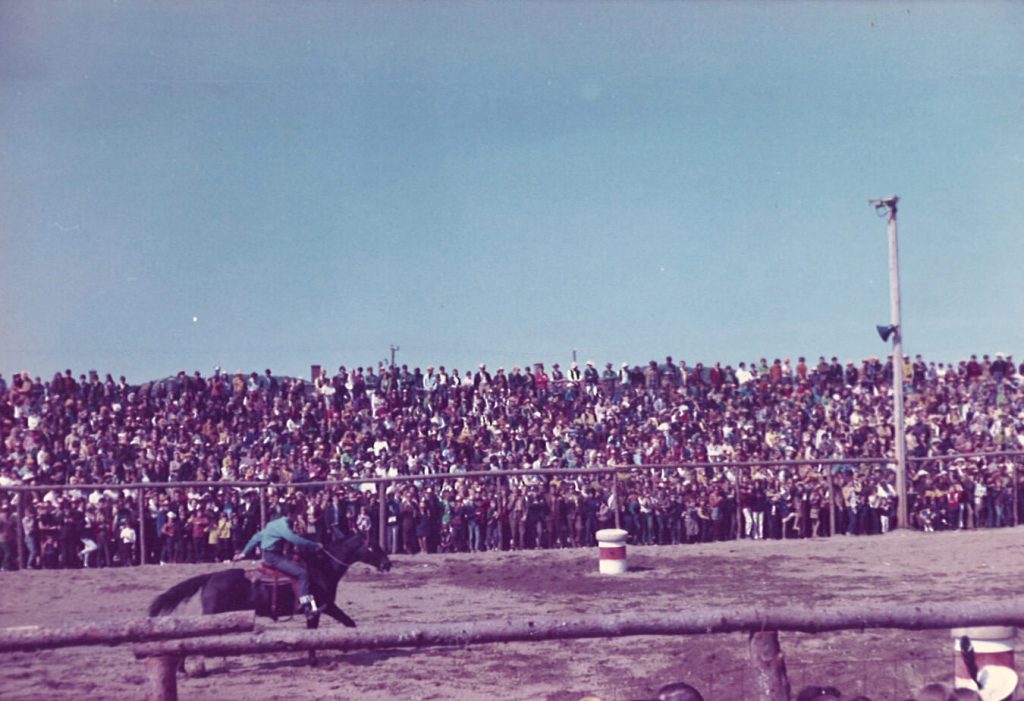
The company of G.A. Boulet Inc., leather-manufacturing specialists, decided to focus their production on western boots. As a publicity strategy, a rodeo day was organized. The local baseball stadium was used for this event. Regardless of the rain which fell insistently the whole day, about five to six thousand visitors took part in this first celebration.
1968
Several local merchants grouped together and formed an Association of merchants, industries and businesses of Saint-Tite.
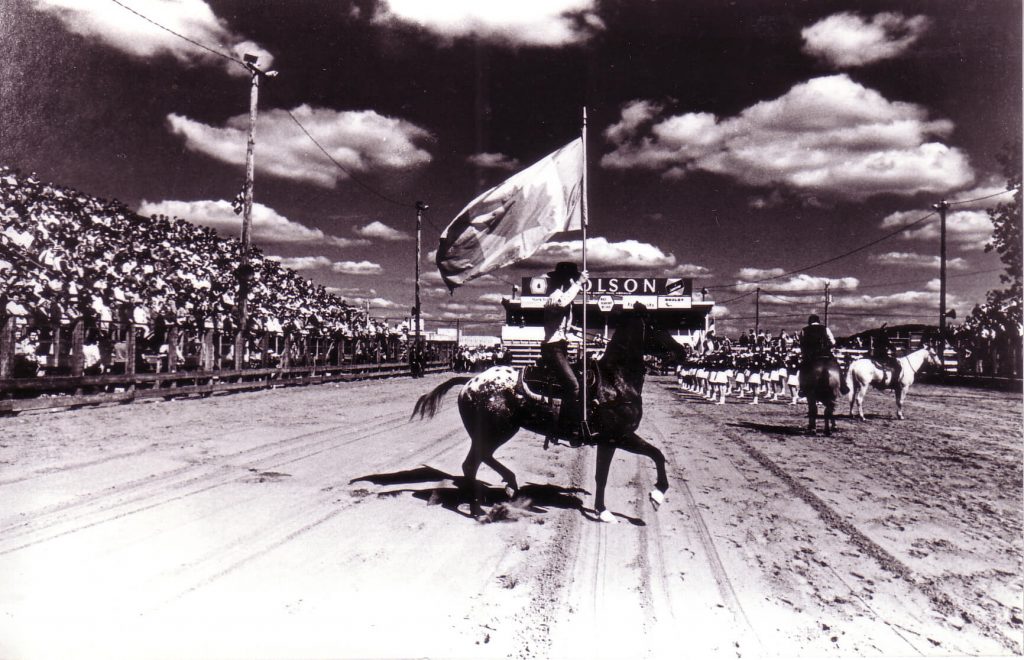
These members got together with G.A. Boulet Inc. in an effort to expand on last year’s experience. By 1968, no less than 25 committees were formed to plan a tourist attraction without equal. The participation of volunteers and local citizens contributed largely in making this a concrete enterprise. The majority of the population participate by wearing costumes and sporting the official hat which symbolize the western trend. The organizers of this first edition focus mainly on the creation of a professional Rodeo and equestrian competitions and the symbolic western parade makes its appearance. The town animates and dresses itself in a western atmosphere.

1972
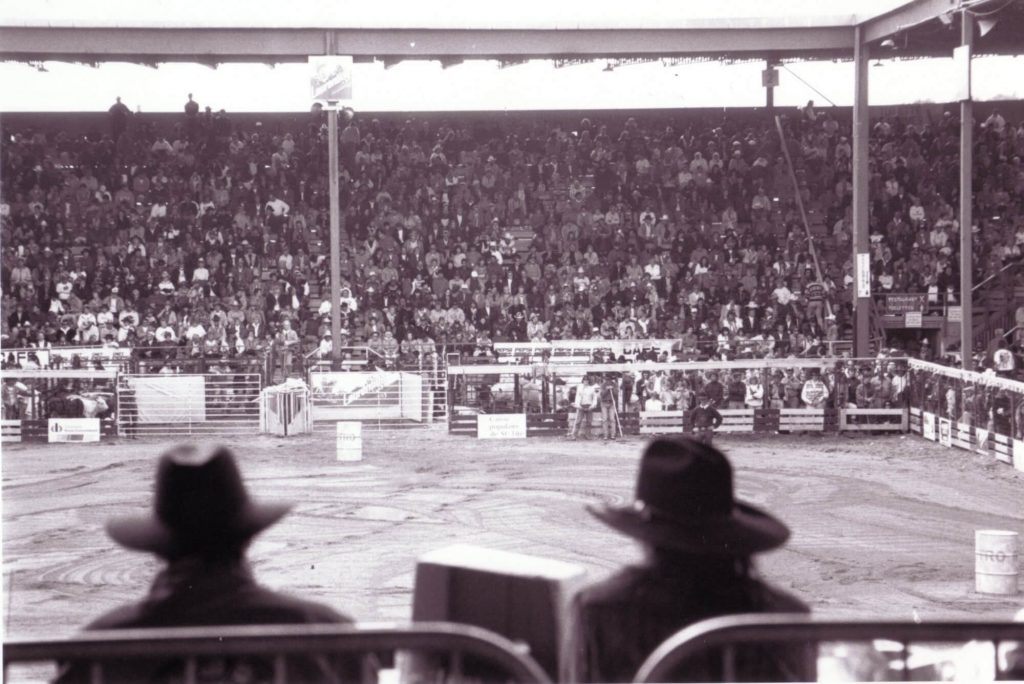
A stadium was built
A stadium was built. In 1999, new installations were built using the highest quality structure with seating capacity for 7 200 people.
1974
250 000 visitors attended over a ten-day period
An informal census based on the number of cars and passengers reveals that 250 000 visitors attended over a ten-day period. Even at this early stage, the Festival Western de St-Tite was quickly becoming very popular.

1981
The Festival consults with the local population
A crash in monetary and human resources is evident, and the Festival consults with the local population to take action to adjust to the needs and demands of one and all. They get their second wind and go ahead with their cavalcade.
1986
A torrential downpour forces the emergency evacuation
A torrential downpour forces the emergency evacuation of all the campers and cowboys located in the low-lying areas of the horseman’s post house.
1989
Céline Dion takes to the stage in the Festival Western de St-Tite grandstand
To the delight of fans, Céline Dion takes to the stage in the Festival Western de St-Tite grandstand.
1995
All grandstand seating is numbered
All grandstand seating is numbered, which greatly increases efficiency for all events taking place at this venue. Previously, tickets were issued on the day of the event only, which caused major line-ups and unknowns from a revenue perspective. The arrival of a new rodeo director creates another milestone in the Festival’s history; a professional rodeo association sanctions all rodeo event taking place during the Festival.
1999
The grandstand gets another makeover, at a cost of 2,4 million dollars (CAD)
The grandstand gets another makeover, at a cost of 2,4 million dollars (CAD). From now on, the Festival Western de St-Tite grandstand can welcome 7 200 visitors.
2002
9 professional rodeos on the program
The Festival Western de St-Tite budget reaches 2 million dollars and its 9 professional rodeos draw over 50 000 spectators during its 35th Edition.
2004
For a second time, Mother Nature tests the St-Tite community and the local population’s capacity to overcome challenges
A second downpour hits St-Tite. As a result of the downpour, the official campground again becomes a temporary lake. Ironically, this event transpires during the 37th Edition, whose theme was Branded for Life! None of the activities were cancelled despite the terrible weather.
2006
The Festival Western de St-Tite welcomes a popular TV program called La Poule aux œufs d’or spécial country
The Festival Western de St-Tite welcomes a popular TV program called La Poule aux œufs d’or spécial country. It is the first time the show is produced outside its usual studio venue.
2007
725 000 visitors
For its 40th Edition, the Festival pulls out all stops and welcomes over 725 000 visitors, which is a record. This exceptional success can be attributed, among other things, to a series of great events, which included a show by the renowned Kenny Rogers, the Canada Cup, and a PBR event. All this, combined with bold and enriched programming, made the 40th Edition one to remember.
2010
The event welcomes the great American singer Alan Jackson
The great American singer Alan Jackson performs in a mind-blowing show.
2011
An avant-gardist show with country band Big and Rich
For its 44th Edition, the Festival Western de St-Tite presents an avant-gardist show with country band Big and Rich. With local sponsors, more than 800 parking spots and a shuttle are available at Saint-Tite’s entrance.
2012
45th Edition
A typical country western program is build up for the 45th Edition! A 11th rodeo, many renowned Quebec’s country artists and a unique ambiance : St-Tite is ready to celebrate! The sherif star, mandatory to access party tents, appears.
2016
Several great new features are on the program!
It’s the year of important changes! Renewed tent’s frontage, Canadian premiere of Saloon – A Musical Acrobatic Adventure of Cirque Éloize and the show’s new country wave prepare visitors for the historical turning point of the 50th Edition.
2017
The 50th Edition breaks all records!
The 50th Edition breaks all records! Crowds, rodeo spectators and incredible weather : all was reunited to crown this anniversary’s success. Legendary band Alabama, Rodeo Xtreme Special 50th Coors Banquet and many program’s activities delights visitors.
a Westernization process,
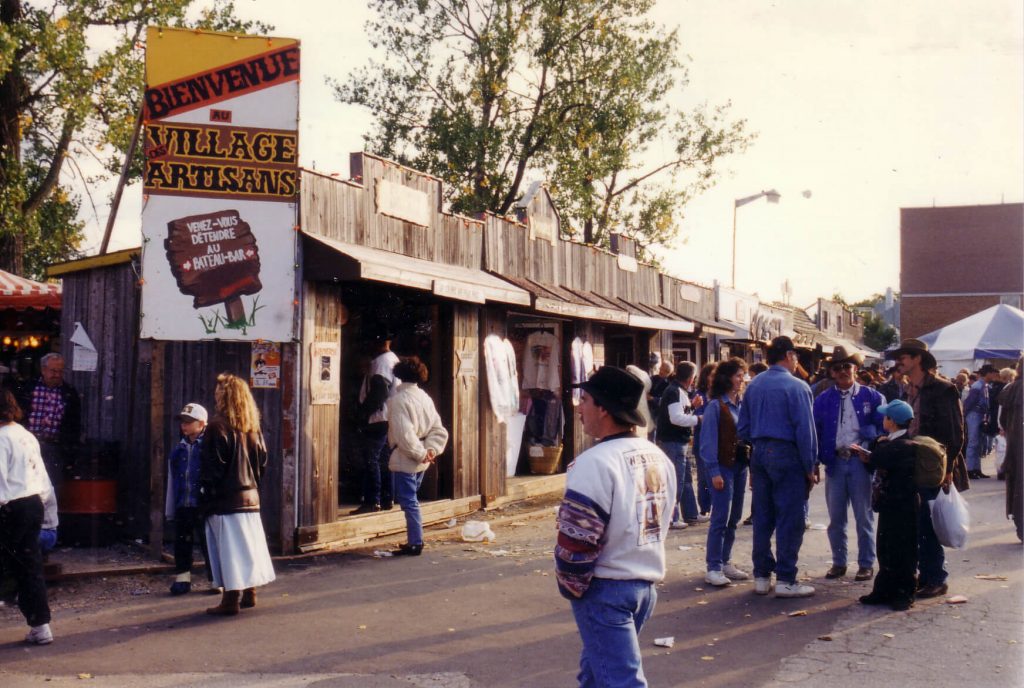
St-Tite has undergone a Westernization process, making the town a unique gateway into Country Western culture. Now visitors can enjoy a charming and typically Western experience with all their senses, reminiscent of the cowboy culture in Western Canada.
Over the years, the Western Festival has continuously maintained an upward momentum. Every aspect of the Festival, be it the budget, the committees or the number of visitors, has surpassed even the most optimistic forecasts and predictions.
OUR PHOTO HISTORY